How to do market research for real estate
The housing market doesn’t randomly change. It shifts due to various forces, such as economic conditions, supply and demand, and buyer behavior. Together, these factors influence everything from risk to investment potential.
Real estate market research brings clarity to home prices and trends that feel unpredictable. A structured study explains why property values rise in one area while stagnating in another. It also turns scattered data points into clear, actionable insights that investors, real estate agents, and sellers use to identify opportunities and assess risk.
Read on to learn more about real estate market analysis. You’ll learn what drives market conditions, how to interpret the data behind them, and which tools can help you make informed decisions.
Real estate market study: Goals and importance
Real estate studies analyze how the housing market performs and where it may head. Rather than relying on assumptions or surface-level trends, a market study looks at measurable indicators, such as median prices and inventory levels, to uncover what’s driving market activity. When investors and Realtors see how buyers and sellers respond to these changing conditions, they can adjust their pricing and selling strategies accordingly.
Market research also identifies risks. Factors such as interest rates and supply levels affect existing home sales and future opportunities. Data-backed insights can be the difference between reactive decisions and proactive planning.
When conducting real estate market research, pay special attention to the following:
- Home prices and affordability: Examine pricing trends alongside local income levels to gauge how affordable homes are for buyers and how pricing affects demand.
- Home sales: Look at existing home sales to track market activity and understand resale market momentum and buyer preferences.
- Interest rates: Monitor mortgage rate trends, since even small changes can influence buyer behavior. Rising rates may slow demand by increasing monthly payments, while falling rates can stimulate market activity by making homes more affordable.
- Housing inventory: Check the number of available listings to assess supply levels and how competitive the market is for buyers and sellers.
- Buyer and seller behavior: Observe how homebuyers react to pricing and financing conditions, and how Realtors and sellers adapt their strategies in response.
Conducting real estate market research in 7 steps
A strong real estate market study helps you uncover the specific factors that shape demand and pricing. Here’s how to do a thorough market analysis for real estate.
1. Establish the study’s goals
Focus on the metrics that actually matter for your decision. Are you evaluating a neighborhood for investment, assessing trends to time a sale, or analyzing affordability for homebuyers? Clear goals give your research direction and prevent you from getting lost in unnecessary data. For instance, knowing whether you want to flip properties or maximize rental income determines what data points you’ll prioritize — such as renovation costs or median home prices.
2. Focus on a specific region or neighborhood
Local conditions can vary widely even between neighboring streets. A narrow focus helps you understand how home prices behave in a specific area. It also reveals how inventory levels shift as new homes for sale enter the market.
Many Felt users study infrastructure when evaluating development sites. The U.S. Electric Power Transmission Lines dataset helps assess feasibility for raw land and early-stage planning. Felt also allows you to look up parcel data so you can compare potential development sites and identify opportunities or constraints that impact the sale price of future projects.
3. Research competition in the area
Check how many homes are currently on the market in your target area and which Realtors and real estate agents are most active. Pairing this research with a price analysis helps you benchmark your property or investment against similar listings and recent home sales. It can even reveal how supply and demand are shaping the market and show you what kind of competition you’re facing.
4. Monitor trends in your target neighborhoods
Pay attention to long-term trends and short-term fluctuations, such as shifts in median home prices and buyer behavior. These patterns can indicate whether a neighborhood is heating up, cooling off, or stabilizing in terms of pricing. Following industry groups like the National Association of Realtors (NAR) helps you stay updated on market sentiment and any policy changes that could affect buying and selling activity.
5. Evaluate physical characteristics of the neighborhood
A home’s location and the quality of its surroundings make a big difference in its appeal, even among properties of similar size or condition. During your research, consider:
- Demographics: The age, household size, and family composition in the neighborhood can affect the types of homes in demand. For example, real estate market analysis can highlight areas with many young families, which might favor large homes with backyards and access to good schools.
- Socioeconomic factors: Income levels and employment rates can help you gauge affordability and market potential. These factors indicate who the typical buyers are and what price points the housing market can support.
- Neighborhood amenities: Proximity to shopping and public transportation impacts buyer interest and property values. Even smaller features like street lighting and sidewalks enhance the appeal and livability of a neighborhood.
6. Assess the historical performance of the neighborhood
Review historical home sales, trends in home prices, and fluctuations in interest rates to see how the market performed in different cycles. This context helps you separate short-term volatility — like seasonal slowdowns or brief rate spikes — from sustained growth or decline. It also lets investors and sellers evaluate risk more accurately and make confident real estate market predictions.
7. Review economic and financial factors
Look past individual properties and consider the wider housing market, where broader economic trends and financial factors play a role in performance:
- Mortgage rates: Small changes in mortgage or interest rates can still affect buyers’ purchasing power. When rates rise, monthly payments go up, which slows home sales and reduces affordability. Lower rates make homes more accessible, boosting demand and energizing the housing market.
- Employment trends: A strong local economy with stable job growth encourages buyers to invest in homes, increasing demand and supporting higher home prices. In areas with significant unemployment or economic decline, home sales may slow, and listings can stay on the market longer.
- Affordability: Comparing median home prices with local incomes shows which buyers can realistically enter the housing market. High prices relative to earnings reduce demand, even when homes are selling quickly.
3 real estate market analysis tools you need to know
Advanced tools make it easier to analyze the housing market, helping you process large amounts of data and quickly visualize trends. Here are the most useful tools when you want to do a market analysis for real estate.
Property management software
Property management platforms track and manage large portfolios, providing real-time data on home prices and occupancy. Realtors and real estate agents can use this software to monitor housing market trends and spot opportunities for selling or investing. With centralized data, you can make faster, smarter decisions about market strategy and property positioning.
Heat maps
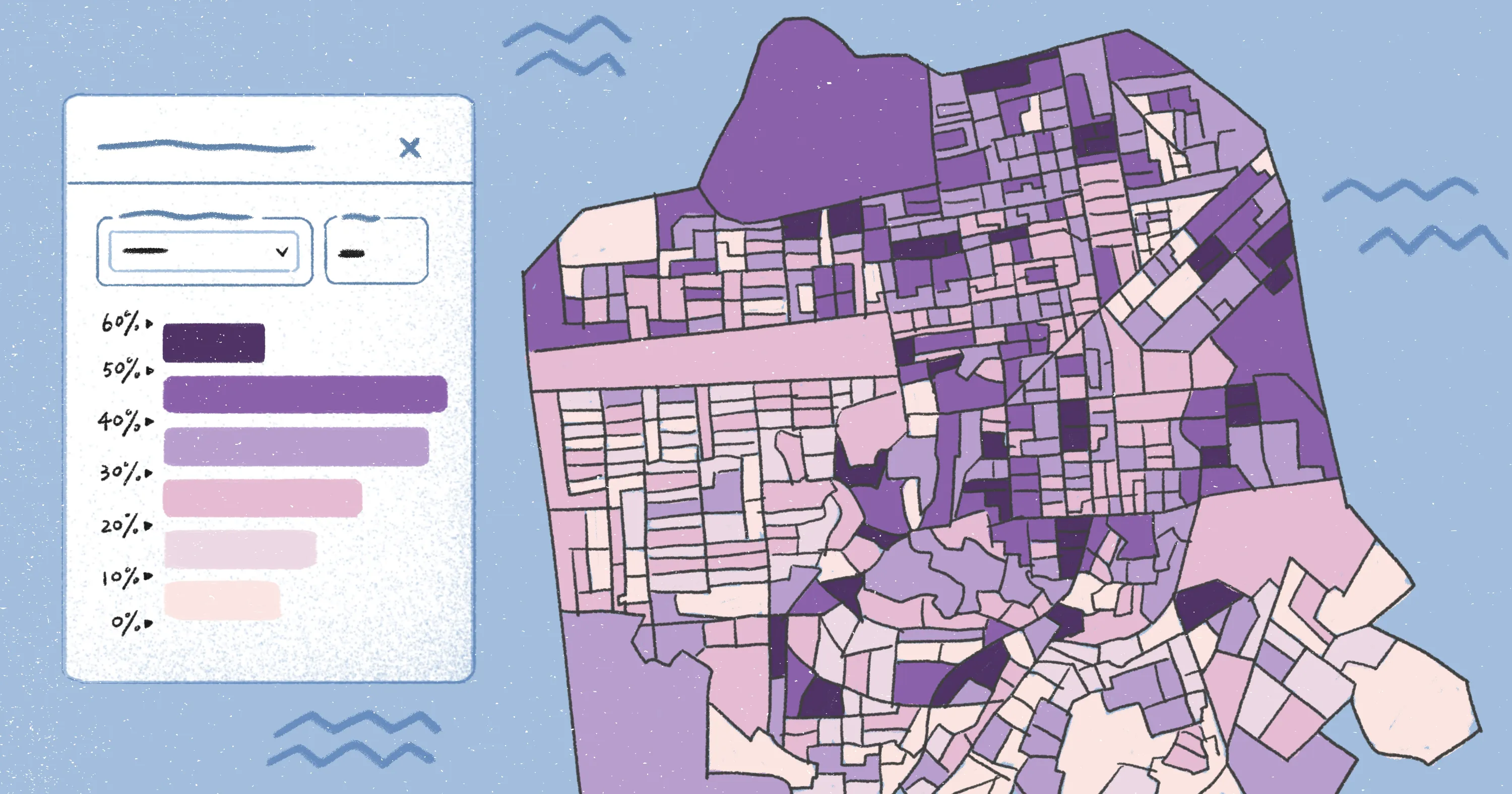
Heat maps turn real estate data into color-based patterns that show where activity is concentrated. They help you spot clusters of rising home prices and shifts in housing inventory.
Felt’s platform builds on this by offering a new visualization type in addition to its legacy options: simple, categorical, and size-by visualizations. With an array of palettes to choose from, your team can highlight trends even when dealing with large volumes of data.
Whether you upload data from Felt’s QGIS plug-in or use the Google Sheets integration, you can quickly turn point data into applicable insights. Better yet, heat maps make it easy to see where prices are rising and where selling might be most profitable.
Upload any spatial file to create a map in Felt and explore how different visualizations can reveal real estate trends.
Predictive analysis platforms
Predictive analysis tools use historical and real-time data to forecast trends in the housing market. By analyzing patterns in home sales and other key indicators, these platforms help Realtors and investors anticipate shifts and make focused, proactive decisions. For example, predictive tools like neighborhood-level forecasting models can signal a hot selling market or when affordability trends might affect buyer interest.
Explore real estate market maps with Felt
A structured approach to real estate market research gives you a grounded perspective and leads to smarter, more profitable decisions. Studying the data helps you navigate the twists and turns of the housing market and uncover where real opportunities lie.
Felt supports this work thanks to its advanced mapping solutions, built for the real estate market. It has the mapping stack modern teams need to tackle the sector’s unique challenges. With Felt, you can:
- Evaluate sites with confidence: Quickly check parcels, infrastructure, and neighborhood details to find the most promising investment opportunities.
- Analyze markets in real time: Track trends in home prices and home sales so you know where the market is headed and can move in that direction.
- Equip every team with intuitive tools: Turn complex spatial data into meaningful insights you can use for solo projects or full-team collaboration.
Take a closer look at the Felt Map Gallery and see how the mapping tools highlight hidden details in the real estate housing market.
FAQ
How often should a real estate market study be updated?
Real estate markets are constantly changing, so you need to update your market study at least once a year, with more frequent reviews during periods of rapid price shifts.
What is the future of real estate?
Evolving technology, demographics, and buyer preferences will shape the future of real estate. Expect more demand from homebuyers looking for flexible living spaces and smart-home integration.
Is the real estate industry growing?
While the real estate industry is still growing, it varies by region. Markets with strong employment trends often see the most expansion. Neighborhoods in economic decline usually experience slower home sales.
Compare Felt using AI