.jpg)
Geographic segmentation: What it is and how to use it with location data
Geographic segmentation is a widely used marketing strategy that divides an audience by where people live or work. Instead of treating every customer the same, businesses use location data to group people into meaningful segments. It helps teams tailor marketing campaigns to local preferences, seasonal trends, and buying behaviors.
A retailer might promote winter gear in colder regions, while a restaurant chain could adjust menu items to reflect local tastes. By understanding how location influences customer needs, businesses can develop personalized outreach and improve operational planning.
Let’s look closer at the geographic segmentation definition, how it works, and why it’s so important in modern marketing.
What geographic segmentation means (and the key factors behind it)
Geographic market segmentation breaks a broad audience into smaller groups based on where people live or spend time. Rather than looking at demographic traits like age and income, this approach focuses on geographic and geographical characteristics. These factors shape how people shop, communicate, and respond to marketing messages.
Geographic factors in marketing help brands understand how location affects consumer behavior so they can create campaigns that speak to individual markets. Businesses use the following location-based variables to build these segments. Some describe physical places, while others capture environmental and cultural factors.
Location
Location is the most basic variable, helping businesses adapt their marketing strategies to the realities of different places. It groups customers by:
- Country
- Region
- State
- Province
- City
- Neighborhood
- Time zone
Example: A software company schedules emails depending on the recipient’s time zone.
Population
Population describes how many people live in a specific area and how they’re spread out. This often includes population density, which helps determine whether an area is urban, suburban, or rural. These differences in density can influence product demand.
Example: A grocery delivery service targets urban areas where customers live close together.
Climate
Climate refers to the long-term weather patterns in a region, like temperature, rainfall, and humidity. These conditions shape everyday needs like clothing choices and housing design.
Example: A clothing company promotes insulated jackets in colder regions and lightweight fabrics in warmer climates.
Seasonality
Seasonality captures predictable patterns tied to events like holidays and peak travel periods. These cycles vary across regions, even when climates are similar.
Example: A travel agency advertises ski packages in winter and beach vacations in summer.
Culture
Culture is all the customs, traditions, and values that shape how people live and spend money. When businesses account for these cultural differences, they can create personalized campaigns that cater to specific audiences.
Example: A food brand features regional flavors or tailors their marketing to local festivals.
Language
This variable groups a customer base by their primary language — helping businesses communicate in ways that feel familiar and accessible. When marketing materials are in someone’s native language, they’re more apt to engage with the brand.
Example: A national retailer publishes ads in English and Spanish to reach consumers in multilingual communities.
Examples of geographic segmentation in practice
Businesses use geographic segmentation to adapt their marketing strategies based on where customers are located. By analyzing patterns in conversion rates and regional demand, they can make better decisions on where to advertise and what to promote.
Here’s how geographic segmentation shows up in real-world scenarios:
- Targeting customers within a delivery radius: A furniture retailer segments customers by distance from each store. After reviewing conversion rates and delivery times, they discover customers within 25 miles are more likely to complete a purchase. Their team directs ad spend on nearby zip codes and offers expedited shipping in those areas.
- Adjusting products and messaging by region: A skincare brand uses geographic segmentation to compare sales patterns across climates. Customers in dry mountain regions purchase more heavy moisturizers, whereas shoppers in humid coastal areas prefer lightweight formulas. The company adjusts its product recommendations and advertising to match those geographic differences.
- Choosing where to expand next: A subscription-based meal service analyzes customer growth and order volume by region. The data shows strong demand in several suburban markets with high concentrations of families. Thanks to this segmentation, they prioritize those areas for distribution centers and targeted launch campaigns.
Benefits of geographic segmentation
Geographic segmentation is both straightforward and highly effective. Most businesses already collect location data through customer addresses, sales records, and website analytics.
Key benefits include:
- More relevant targeting: Businesses can tailor campaigns, offers, and messaging to match the needs and preferences of customers in different locations. This allows marketers to align their decisions with regional performance.
- Better resource allocation: Geographic segmentation helps companies focus budgets, inventory, and operational efforts on regions with the strongest results. Instead of spreading resources evenly, teams invest where performance is highest.
- Clearer market expansion: By comparing demand, customer growth, and sales trends across locations, businesses can see which markets offer the best opportunities for expansion and decide where to open new facilities.
- Easy to implement: Location is one of the most accessible forms of segmentation. Companies can use existing customer and sales data to build geographic segments without complicated tools or a lengthy setup process.
Challenges of geographic segmentation
While geographic segmentation shows where customers are located, it doesn’t explain why they make decisions. So even though location can reveal useful patterns, it has limitations when used on its own, including:
- Overgeneralization: Each location has a mix of audiences, so grouping people by geography can blur important differences in needs and behavior.
- Lack of behavioral insight: Location data doesn’t reveal intent or motivations behind customer decisions, which limits how deeply businesses understand behavior.
- Less relevant in digital contexts: Online activity is often driven by interests rather than geography, reducing how much location alone can explain.
- Requires other segmentation types: Many companies have to combine geographic, behavioral, and psychological segmentation to get a complete view of their audience.
How to use geographic segmentation effectively with maps
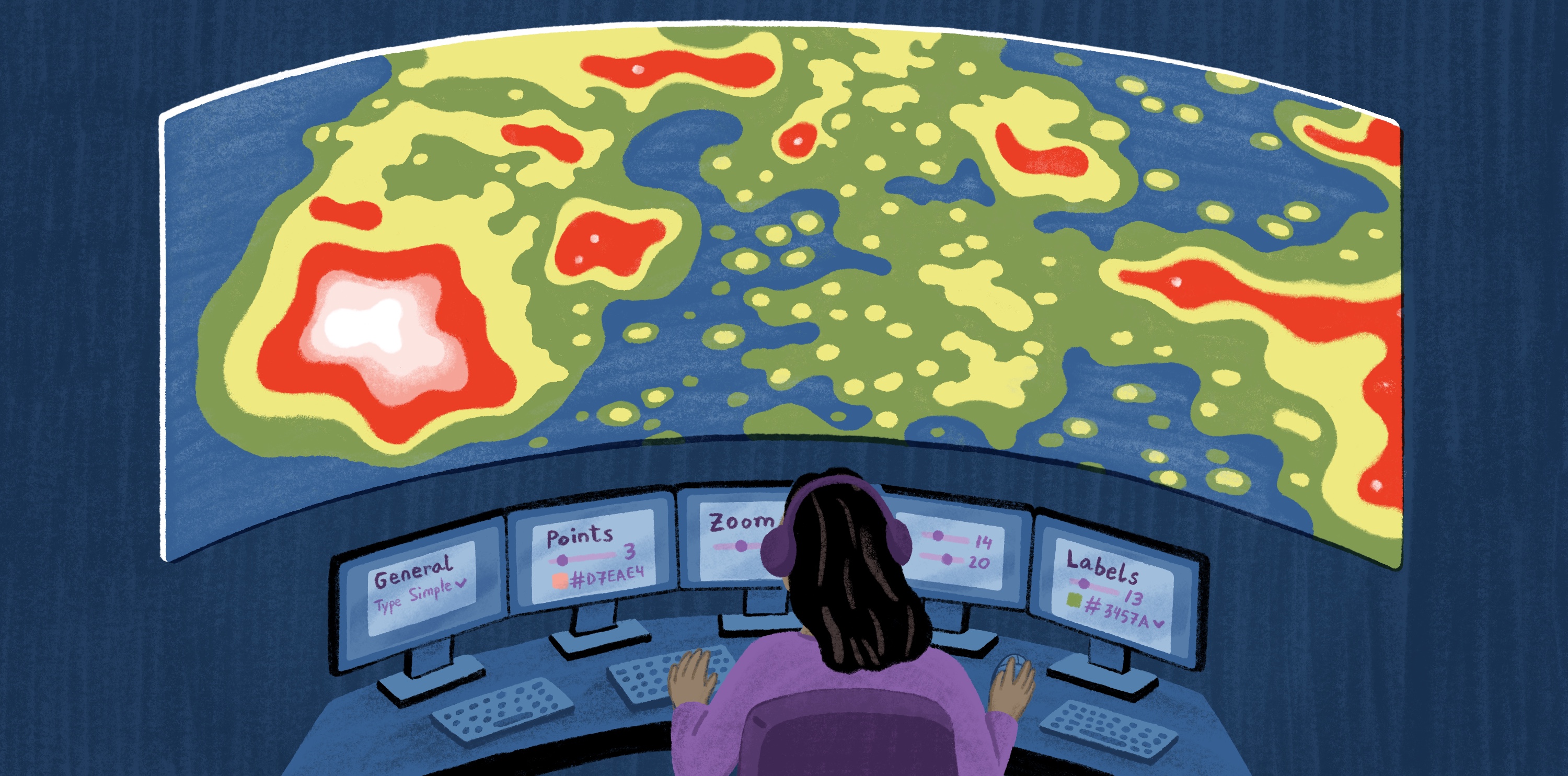
Geographic segmentation is most effective when you stop looking at raw tables and start putting data on a map. Once you can see how customers and performance are spread across locations, patterns show up much faster and are easier to respond to.
Here’s how to implement geographic segmentation.
Map your data
Plot key data on a map. That could include customer addresses, sales by region, and conversion rates. When you visualize this data geographically, you can quickly spot activity clusters and where engagement drops off.
Compare regions side by side
Compare regions using the same key metrics. Look at performance, growth rates, or customer density to see how areas stack up to one another. This is where geographic segmentation starts to pay off, as you’ll notice that similar-looking regions can still behave differently.
Add context without additional data
Layer in supporting data like demographics, market size, and external data sets to give your map more meaning. With this extra context, you get a better gauge of what’s driving the patterns you see, whether it’s population differences or local market conditions.
Turn geographic patterns into decisions
Use what you learn to guide decisionmaking. That might mean reallocating budget to stronger-performing regions, adjusting how you target certain areas, or prioritizing specific locations for expansion based on demand.
The real value of geographic segmentation comes from knowing how to compare locations, add context, and focus on the most relevant data.
How mapping tools like Felt support geographic segmentation
To make the most of geographic segmentation, you need tools designed for spatial analysis. Mapping platforms make it easier to visualize location data, assess regions side by side, and combine multiple data sets in one place. Instead of sorting through static reports, you can see how geographic variables interact and use those insights to inform decisions.
Felt is a cloud-native GIS platform built for spatial analysis at scale. Teams can use the platform to:
- Upload customer and performance data
- Explore patterns across regions
- Collaborate in real-time
Felt helps you turn raw geographic data into a clearer picture of how each segment performs. A marketing team might map customer addresses and conversion rates. They can then overlay population density data to identify the strongest business opportunities. Viewing these patterns across locations makes it easier to allocate budget and prioritize expansion.
Felt supports this work with AI-powered analysis and enterprise-grade infrastructure. Teams can connect live data from cloud sources like Postgres, Databricks, Redshift, Snowflake and BigQuery and filter regions, run spatial joins, and layer demographic and performance data without writing code. Because Felt is GDPR compliant and SOC 2 Type II certified, customers gain stronger security and control over their sensitive geographic data.
Check out the Felt map gallery to see how enterprise-ready mapping and AI bring geographic data to life.
FAQ
What is geographic segmentation in marketing?
Geographic segmentation is a marketing strategy that divides audiences based on where they live or work. It helps businesses tailor products, messaging, and campaigns to match the needs and preferences of people in specific locations.
What are the main types of market segmentation?
The four types of market segmentation are: geographic, demographic, psychographic, and behavioral segmentation. When used together, these approaches give companies a clearer understanding of who their customers are and how they make decisions.
Compare Felt using AI




.jpg)